

Unconventional Educational Art Program
Expand your mind beyond technique.
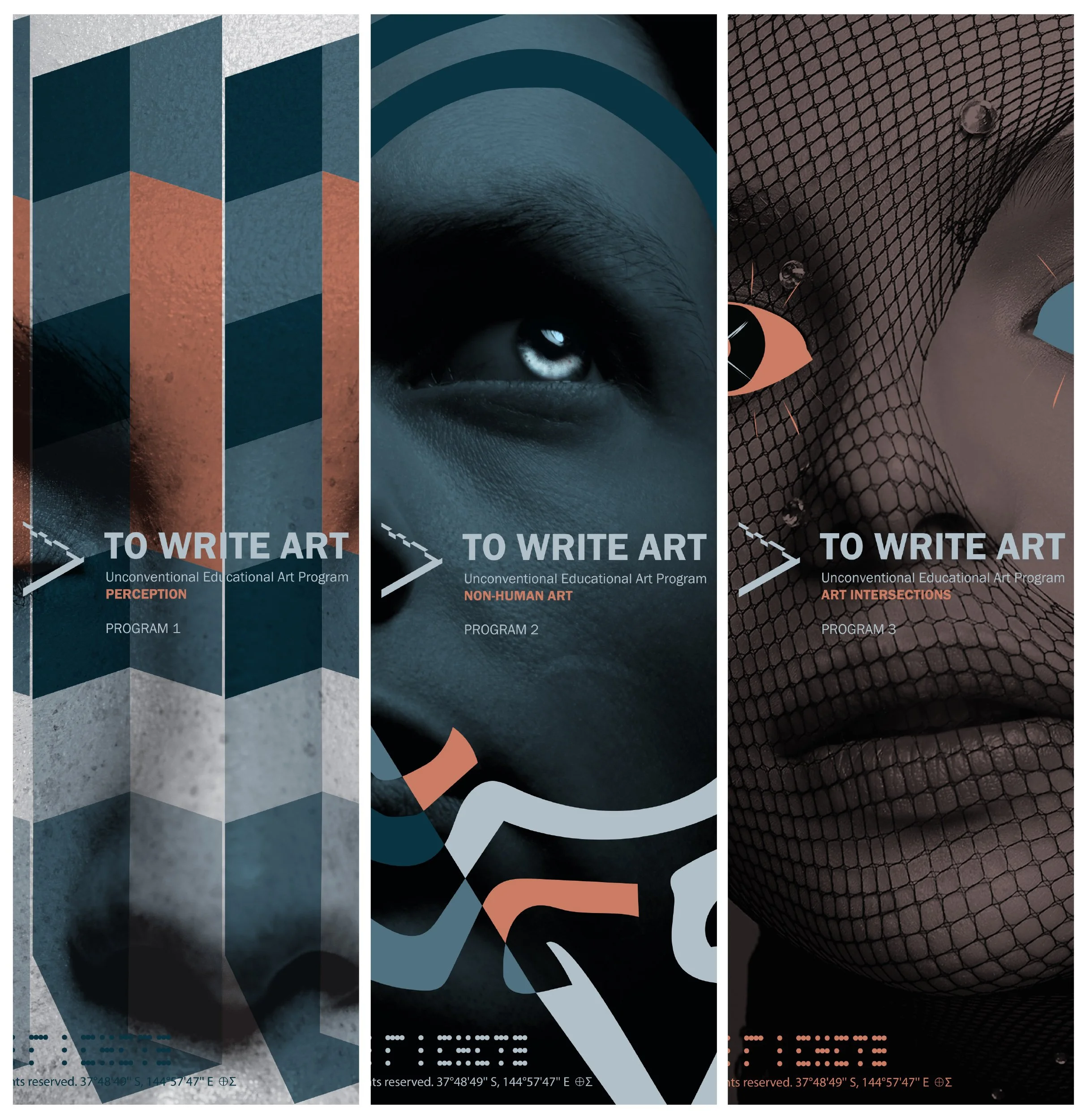
After learning the basics of art, many artists reach a point where they begin searching for something deeper. They can draw, paint, sculpt — but then what? Traditional art education often ends where awareness begins.
We believe traditional education is essential, but perhaps it is time for it to evolve — not only teaching students about the artists who transformed the art world, but also teaching them how to think in ways that allow them to do the same.
To Write Art moves beyond conventional skill into challenging ideas, hidden systems, self-discovery, and expanded perception. It is art education for minds that have outgrown repetition. Across three programs, each approximately 200 pages long, students engage with philosophical and conceptual content, reflective questions, and creative tasks designed to encourage new ways of thinking, seeing, and making art.
Ideal for artists at different stages of their creative journey — including self-taught artists, emerging artists, established artists, neurodivergent learners, and anyone who is comfortable with extended reading and reflective thinking.
For students who:
seek an unconventional style of education
are mature, independent learners (16+) who thrive with self-directed learning
want to create original artwork
are ready to commit to a 12-month art journey
want to expand their creative thinking through unconventional practice
are interested in conceptual and philosophical ideas
seek depth and authenticity
Not for students who:
are seeking traditional art education
want to learn specific art techniques or traditional artistic methods
are completely new to art and have not yet developed foundational skills
expect quick results in a short period of time
need regular critique, approval, or feedback on their artwork
prefer visual or hands-on learning over reading, reflection, and exploring written concepts